Research Projects
Description
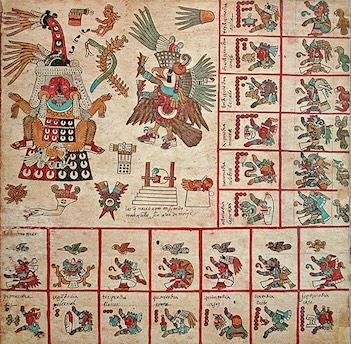
This research focuses on the boundary of images and text, and how iconicity, notational conventions and grapholinguistics influence our recognition and interpretation of graphic signs.
Layman's Description
How does our language influence the way we think? Does writing present different challenges to speaking? Can we use images to overcome the limitations of words? How should we approach the ineffable, and everything that seems to be beyond words, such as art, aesthetics, and ethics?
Key Findings
Our two key touchstones are Wittgenstein's critique of aspect seeing, and the problem of liguistic relativity commonly (if incorrectly) known as the Sapir-Whorf hypothesis. We approach Wittgenstein's concept of "the limits of language", together with his practice of writing that includes images and diagrams, from the perspective of linguistics instead of the traditional approach from semiotics. We approach linguistic relativity from the perspective of writing systems instead of the spoken word. Our outcomes therefore inform text and image representation, the philosophy of action and performativity with words and images, non-linguistic communication, constructivism and phenomenology.
Description
The global history of the arts in higher education has been punctuated by a series of political interventions, which had the effect of progressively academicizing the arts. The resulting contemporary educational environment is one in which there is an array of artistic communities holding diverse values in a context in which there are drives towards harmonization, transferability and inter-disciplinarity. Ideally, harmonization should be achieved without homogenization, and the richness and diversity in the art culture in HE has proven to be resilient to these interventions. However, there are lost opportunities for the optimal contribution of the arts to the higher education sector owing to a lack of understanding (by both artists and academia alike) of the values inherent in the academicized arts. Effective harmonization of the arts within academia can only be achieved through making explicit what are currently the implicit values of the constituent arts communities following the global process of academicization.

Description
Year 1 of the project, also known as the Non-Traditional Knowledge Project, was an ontology-building phase. The findings from this phase extended our understanding of the central role of “experience” in the creative arts, which is quite distinct from its role in the natural or social sciences. We characterised this as the centrality of “the direct encounter with the artefact”. We already knew that artists claim a need for the presence of the artwork in research, but with these findings we were able to provide academic arguments for why this presence is needed. There were two further findings from this phase: (1) that the mere presence of practice was not necessarily an indicator of so-called practice-based research, and (2) that cases of practice-based research that could be regarded as a new paradigm – as opposed to a variant of existing paradigms – are less common than is claimed by the researchers themselves.
Year 2 of the project focussed on the role that research paradigms, and models of knowledge in general, play in giving meaning to terms such as “criteria”. We found that there were three different knowledge models in use in contemporary academia, i.e. natural and technological, human and humanities, and applied and social. Within each of these models, the role of common terms such as “evidence” is quite different, and as a result we concluded that transdisciplinarity subjects such as the creative arts run the risk of being misunderstood owing to different cross-model understandings. This led us to conclude that transdisciplinary understanding would be facilitated not by a mere “translation” of the meaning of terminology, because the underlying significance of the terms is model-specific, but instead by an analysis of the network of concepts that constitutes each model. Such an analysis would reveal why certain actions are significant towards research in one model, whereas in another model these actions are irrelevant. The outcomes of this phase fed the Research Training Course that we gave to staff and students at our University, and which we also delivered at Royal College of Art, Chelsea, and TU Delft. Subsequently, Biggs and Büchler were invited as consultants on a series of projects on practice-based research in architecture at Mackenzie University in São Paulo (2010 to present).
Year 3 of the project adopted a sociological perspective on what we had previously assumed to be epistemological arguments. We realised that the detailed academic disagreements about how research should be undertaken formed a subset of a wider social context in which groups differentiate themselves according to certain social practices that they share. For example, being an architect is as much about adopting certain attitudes as it is about acquiring certain competences. Thus we concluded that academic research is as much a culture-specific activity as it is an objective, culturally independent one. Our findings will benefit knowledge production in areas that fall between traditional knowledge models or that are transdisciplinarity, owing to greater clarity about what is inherent in a discipline and what are merely habitual practices, thereby liberating the changes that can lead to innovation.
Layman's Description
Investigating non-traditional forms of knowledge and knowledge communicatin in art and design research.
Description
The ar-dp project is essentially a networking initiative which creates and facilitates academic collaboration across disciplines, institutions and countries in areas of design practice such as architecture, design and the arts in general. Currently, the network hosts collaborative activities between the UK, Sweden and Brazil in the form of postdoctoral research projects, joint bilingual publication projects, international exchange workshops and collaborative bid development. The themes consider academic research, professional practice and education and learning in architecture, theory of practice-based research in areas of creative practice and the effect of cultural and knowledge transfer in the design activity.

Description
The project aims to develop criteria for identifying and evaluating the quality of so-called practice-based or arts-based research in the creative and cultural industries. Outcomes from the project are informing Swedish national research policy.
In 2004 the Swedish government financed the prestigious Sigtuna symposium in order to discuss fundamental issues to do with so-called practice-based or arts-based research. The motivation for the event was the proposal of a bill that would be presented to the Swedish parliament in October of that year and would enable the Research Council to amplify the scope of its research funding to include the academic production from the arts-based research sub-group. This government initiative responded to the development of this subject in the neighbouring countries, mainly the UK, and consequently to Sweden’s need to maintain its commercial and pedagogical competitiveness in the international academic context. The Swedish Secretary of Education attended the symposium and in 2005 government funding was made available through the Research Council for the creation of four Visiting Guest Professorship posts. These four posts were created so that international specialists could visit universities and research centres in Sweden in the 2006/7 academic year and share their research on arts-based research.
The Visiting Guest Professorship in architecture was awarded to Michael Biggs from the UK University of Hertfordshire. Biggs is internationally renowned for his activity in the area of arts-based research in art and design. On being invited as Visiting Guest Professor in the Universities of Lund, Stockholm and Götenberg, he proposed to use the opportunity to develop his research into the nature of arts-based research in art, architecture and design. This subject is of importance in UK for the purposes of research quality assessment; in the EU in response to the need for methodological clarity in funding applications in the cultural sector; and for national governments such as Sweden for the implementation of research funding and assessment strategies based on international models of experience and best-practice. Biggs has been in a long-standing collaboration with University of Lund, and been an advisor and visitor at a number of other Scandinavian universities in recent years, and on the basis of this experience he proposed to develop the philosophical and foundational issues around practice-based research as evidenced by practitioners in these universities.

Description
Research into Practice had a core interest in the fundamental principles, philosophies, and problems that underpin research in the creative and performing arts. Its objectives included understanding how research contributes to the development of the discipline; and the problem of the relationship of the image, the object, the presentation and the word. It sought to facilitate the highest level of debate amongst professional researchers, academics, practitioners and postgraduate students; to respond to the national and international context; and to contribute to the development of research policy.
Research into Practice is best known for its biennial international conference. The conference has been a selective venue for high level debate by contributors from around the world. Each conference featured just 30 of the hundreds of submitted papers, and following two rounds of double-blind peer-review, the best were published in the equally well-known open-access e-journal Working Papers in Art and Design. Open access is part of the project's commitment to widening and deepening the debate on the foundations of research in the creative and performing arts. The journal is listed by Directory of Open Access Journals, which covers free, full text, quality controlled scientific and scholarly journals.
Description
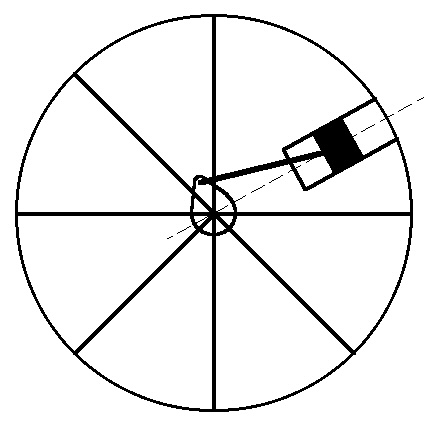
The project contributes to an international collaborative workgroup comprising the Universities of Hertfordshire, Bergen and Innsbruck, The Royal Netherlands Academy and Intelex Corporation (USA). The group is concerned with the integration of electronic data and text analysis software. Michael's main expertise is the analysis of images in texts and their role in communication, with special reference to their use by Wittgenstein. His contribution to the group's research is the integration of graphics and diagrams into electronic resources. Intelex is the world leader in primary e-texts in philosophy and the main output of the group will be in the area of multi-lingual e-texts and software resources for the humanities.